Posts

Why Am I Not Gaining Muscle? 10 Common Reasons

Image
 You’re training regularly, lifting weights, and trying to improve your diet—but your muscles still don’t seem to be growing. So, why am I not gaining muscle? Muscle growth depends on more than simply spending time in the gym. Nutrition, progressive training, recovery, exercise technique, and consistency all play important roles. Here are 10 common reasons your muscle growth may be slower than expected. 1. You’re Not Eating Enough Calories Building muscle requires energy. If you consistently eat too few calories, your body may have fewer resources available to support muscle growth. If your body weight and measurements haven't changed for a long time, your calorie intake may need to be reviewed. Focus on: Adequate daily calories Quality food sources Enough carbohydrates and fats Consistent meals 2. You’re Not Getting Enough Protein Protein provides the amino acids your body needs for muscle repair and growth. Include protein-rich foods such as: Eggs Chicken Fish Lean meat Dairy Soy...

T3 Hormone and Its Role in Bodybuilding: What Every Athlete Should Know

Image
  T3 Hormone and Its Role in Bodybuilding: What Every Athlete Should Know T3 Hormone and Its Role in Bodybuilding: What Every Athlete Should Know When it comes to fat loss, muscle preservation, and metabolic health, few hormones are as important as  T3 , also known as  triiodothyronine . Whether you’re prepping for a show, going through a shredding phase, or simply looking to optimize your physique, understanding the  role of T3 in bodybuilding  is essential. 🔍 What Is T3? T3 (triiodothyronine) is one of the two main thyroid hormones, the other being T4 (thyroxine). While T4 is the storage form, T3 is the  active thyroid hormone  that directly influences your  metabolic rate, fat-burning capacity, and protein turnover . 💪 How T3 Impacts Bodybuilding 1.  Increases Metabolism and Fat Loss T3 accelerates the  basal metabolic rate (BMR) , meaning your body burns more calories even at rest. For bodybuilders in a  cutting phase , higher...

Online Courses at IC Fitness Club: Become a Certified Fitness Professional from Anywhere

Image
  Online Courses at IC Fitness Club: Become a Certified Fitness Professional from Anywhere Online Courses at IC Fitness Club: Become a Certified Fitness Professional from Anywhere In today’s fast-paced world, flexibility in education is more important than ever — especially in the fitness industry. At  IC Fitness Club , India’s premier fitness education platform, we offer  industry-recognized online courses  that empower you to launch or level up your career as a fitness professional, coach, or nutrition expert — all from the comfort of your home. Whether you’re just starting or looking to advance, our  online personal trainer course ,  online gym trainer course , and  online nutrition course  are built for real-world success. Why Choose IC Fitness Club’s Online Courses? Our online certification programs are created by top-tier coaches, educators, and experts with years of hands-on experience. We combine  science-based education  with pr...

Best Institute for Fitness Certification – IC Fitness Club

Image
  Best Institute for Fitness Certification – IC Fitness Club Transform Your Passion into a Profession with IC Fitness Club In today’s fitness industry, knowledge is the key to success. Unfortunately, many trainers in India lack proper education in  exercise science, nutrition, and injury prevention , leading to ineffective training and common injuries such as  golfer’s elbow, shoulder impingement, and slipped discs . At  IC Fitness Club , we are on a mission to change this. Our fitness certification programs are designed to produce highly skilled, well-educated trainers who can  deliver real results while keeping clients safe and injury-free . Why IC Fitness Club? ✅  Science-Backed Education Our curriculum is built on  exercise science, biomechanics, human anatomy, and sports nutrition , ensuring that trainers gain an in-depth understanding of how the body works. ✅  Practical Hands-On Training Fitness education isn’t just about reading textbooks—i...

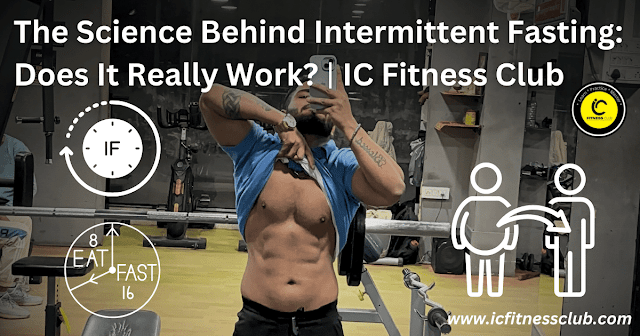
The Science Behind Intermittent Fasting: Does It Really Work? | IC Fitness Club

Image
  The Science Behind Intermittent Fasting: Does It Really Work? | IC Fitness Club Intermittent fasting (IF) has gained immense popularity in recent years as a powerful tool for weight loss, improved metabolism, and overall health. But does it really work? Let’s explore the science behind intermittent fasting and its impact on the body. What is Intermittent Fasting? Intermittent fasting is an eating pattern that cycles between periods of fasting and eating. Unlike traditional diets that focus on what to eat, IF focuses on when to eat. The most common IF methods include: 16/8 Method : Fasting for 16 hours and eating within an 8-hour window. 5:2 Diet : Eating normally for five days a week and restricting calorie intake (500-600 kcal) for two non-consecutive days. Eat-Stop-Eat : A 24-hour fast once or twice a week. Alternate-Day Fasting : Fasting every other day with minimal calorie intake on fasting days. How Intermittent Fasting Affects the Body Fasting triggers several physiological...

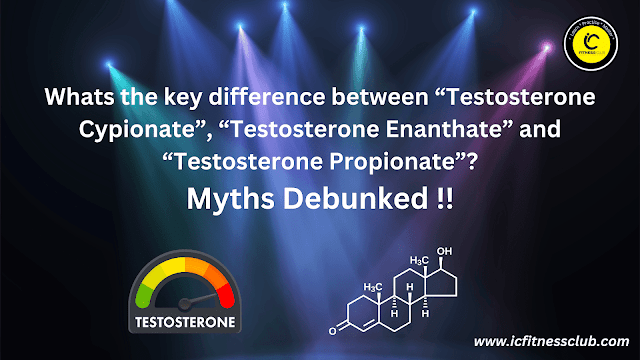
Testosterone Cypionate vs. Enanthate vs. Propionate: Key Differences and Uses

Image
  Testosterone Cypionate vs. Enanthate vs. Propionate: Key Differences and Uses Testosterone is the primary male androgen hormone responsible for muscle growth, fat loss, and overall vitality. Among the different esterified forms available,  Testosterone Cypionate, Testosterone Enanthate, and Testosterone Propionate  are the most commonly used in fitness and medical applications. But what makes them different? Let’s break it down. Understanding Testosterone Esters Testosterone esters are modifications of the base testosterone molecule that influence how long the hormone stays active in the body. The ester determines the  half-life , which affects injection frequency and release rate. 1. Testosterone Cypionate Half-life:  Approximately 8-12 days Injection Frequency:  Once every 7-10 days Best For:  Long-term hormone replacement therapy (HRT) and muscle-building cycles Pros:  Less frequent injections, steady release Cons:  Takes longer to reach...

Insulin in Bodybuilding: The Ultimate Guide

Image
Insulin in Bodybuilding: The Ultimate Guide Introduction In the realm of bodybuilding, insulin is more than just a hormone that regulates blood sugar; it’s a potent tool for enhancing muscle growth and recovery. This blog delves into the role of insulin in bodybuilding, discussing its benefits, risks, and the best practices for its use. What is Insulin? Insulin is a hormone produced by the pancreas, crucial for regulating blood glucose levels. It facilitates the absorption of glucose into cells, providing them with energy. Beyond this, insulin’s ability to transport nutrients into cells makes it a powerful anabolic agent in bodybuilding. Insulin’s Role in Muscle Growth As an anabolic hormone, insulin promotes muscle growth by increasing the uptake of glucose and amino acids into muscle cells. It also inhibits protein breakdown, ensuring that the body retains more muscle tissue during intense training. Read More... Watch Video Here

Understanding Gluten: A Comprehensive Guide

Image
  Understanding Gluten: A Comprehensive Guide Gluten is a term that has gained significant attention in recent years, but what exactly is it, and why does it matter? In this guide, we delve into the world of gluten to explore its science, its impact on health, and practical tips for navigating a gluten-free lifestyle. What is Gluten? Gluten is a group of proteins found in certain grains, including wheat, barley, and rye. It acts as a binding agent, giving dough its elasticity and helping baked goods maintain their shape. The two main proteins in gluten are glutenin and gliadin, the latter of which contributes to the stretchy texture of dough. Where is Gluten Found? Gluten is commonly found in products made from wheat, barley, and rye, such as: Bread Pasta Cereals Baked goods However, gluten can also be present in less obvious foods like sauces, dressings, and even some processed meats. Reading ingredient labels is essential for anyone avoiding gluten. Read More